Choose a spiral paper tube machine by matching five core factors to your production: tube diameter range (e.g. Φ20–250mm), paper layers and wall thickness (e.g. 3–6 layers, 1–4mm), production speed (e.g. 1–25 m/min), glue application method (double-side scraping gluing with automatic circulation is preferred), and electric control quality (brand PLC/inverter/servo such as Mitsubishi + OMRON encoder). A dual-head design doubles capacity with only 1–3 operators, making it the most cost-effective option for medium and large tube factories.
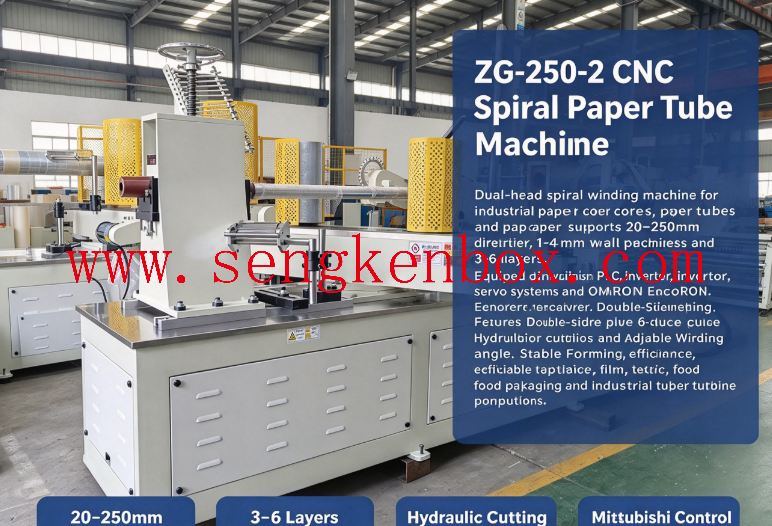
Key Takeaways
- Spiral winding machines form strong tubes by wrapping 3–6 paper layers at an angle; layer count and glue quality determine tube strength.
- Verify the real diameter range, wall thickness, speed and cutting method before purchase — they decide what products you can sell.
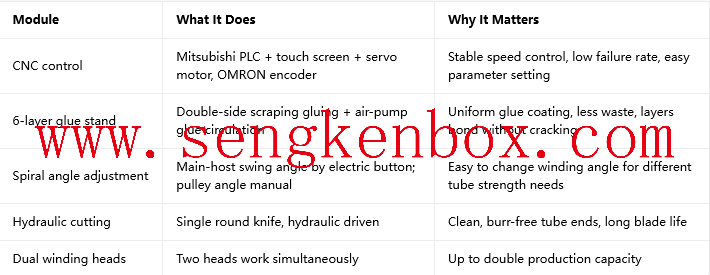
- Double-side gluing with glue circulation beats single-side coating: uniform bonding, less glue waste, no delamination.
- Brand electric parts (Mitsubishi PLC/inverter/servo, OMRON encoder) mean lower failure rate and longer continuous running.
- Hydraulic single-round-knife cutting gives clean, burr-free tube ends.
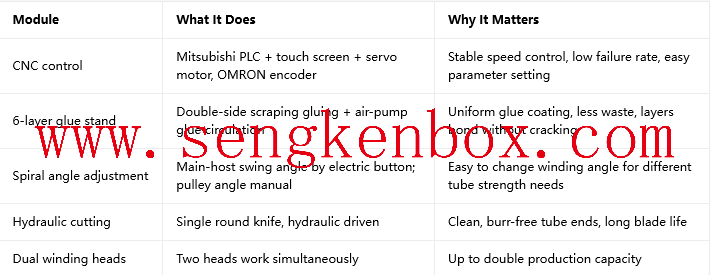
- Dual-head machines nearly double output with only 1–3 workers — lowest cost per tube for high-volume production.
- Molds are changeable, so one machine can switch between thin packaging tubes and heavy industrial cores.
How a Spiral Paper Tube Machine Works
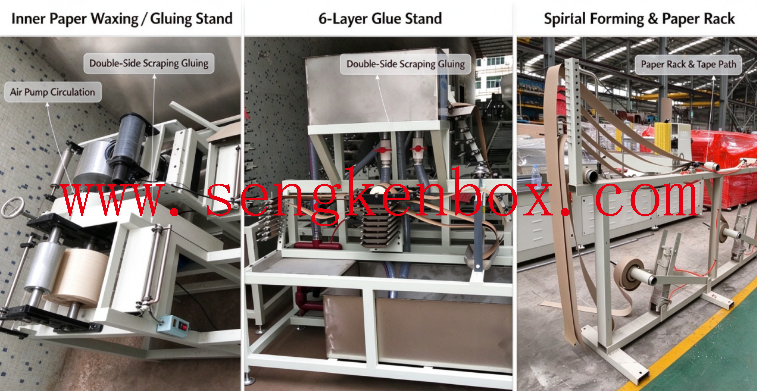
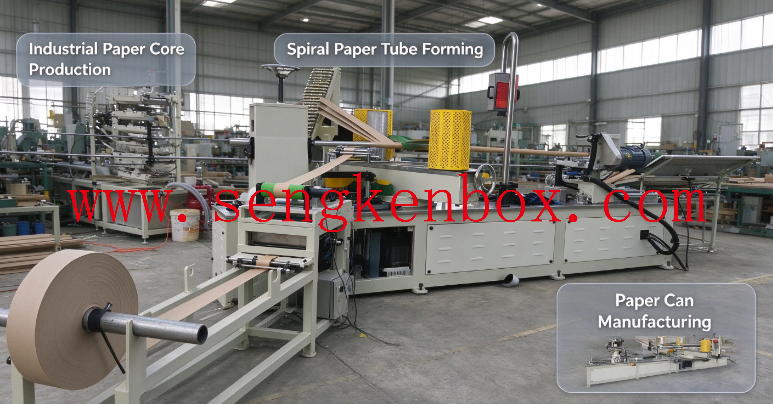
A spiral paper tube machine continuously feeds kraft paper strips through a gluing stand, then winds them around a rotating steel mold at a set spiral angle. As layers accumulate, the tube wall builds up to the required thickness. A hydraulic round knife cuts the formed tube to length automatically. The complete cycle — paper feeding, double-side gluing, spiral winding, forming and cutting — runs in one workflow, which is why these machines produce consistent roundness and strong structural stability.
Technology highlights of a modern CNC model
 Six Key Factors to Check Before You Buy
① Tube Diameter Range
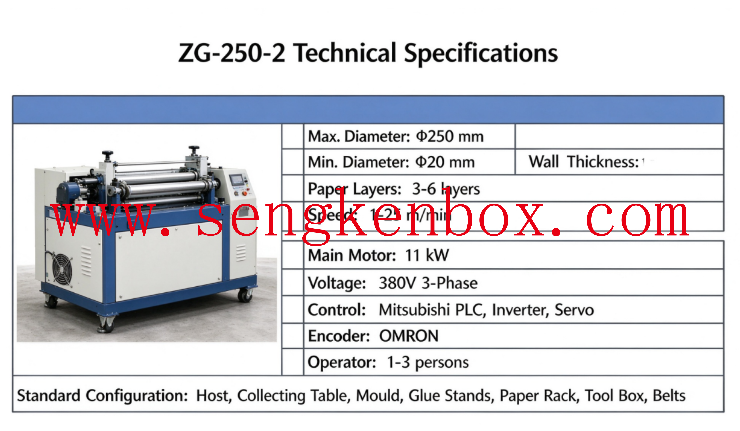
Check both the maximum and minimum inner diameter. A machine with Φ20–250mm range covers tape cores, film cores, textile bobbins and large packaging cans on one line. Molds are changed to switch sizes, so confirm the mold set included.
② Paper Layers & Wall Thickness
Most production needs 3–6 layers and 1–4mm wall thickness. More layers mean stronger tubes but slower speed and higher glue consumption. Choose the range that matches your best-selling products, not the widest possible.
③ Production Speed
Typical speed is 1–25 m/min with frequency-conversion (inverter) speed regulation. Faster speed lowers cost per meter, but stability matters more than top speed — ask for real continuous-run output, not peak figures.
④ Gluing System
Double-side scraping gluing with automatic glue circulation is the standard for quality. It coats both sides evenly, saves glue, and prevents delamination. Also check whether inner-paper waxing/gluing and outer-paper gluing stands are separate — this supports complex products like food-grade cans.
⑤ Cutting Method
Hydraulic single-round-knife cutting produces clean ends without burrs. Some cheaper machines use manual or electric cutting, which slows output and damages tube ends.
⑥ Electric Control Quality
Brand components (Mitsubishi inverter/PLC/touch screen/servo, OMRON encoder) directly decide uptime. For 24-hour industrial running, non-brand electric parts cause frequent downtime and high maintenance cost.
Dual-Head vs Single-Head Machine
 Verdict: if your monthly volume is stable and growing, dual-head gives the lowest cost per tube. If you only produce short runs, a single-head machine is enough.
Application Scenarios
- Industrial paper cores— adhesive tape cores, plastic film roll cores, textile yarn tubes, label roll cores
- Packaging paper cans — food cans, gift tubes, cosmetic cylinder packaging
- Other spiral products— construction, printing and general industrial spiral paper pipes
Customization, Lead Time & After-Sales
- Custom molds: molds are changeable; suppliers can tune molds and partial configurations to your target tube sizes. Send your required inner diameter, wall thickness, paper layers and expected output for a proposal.
- Lead time:production lead time is negotiable and confirmed in quotation — always request the current schedule before ordering.
- After-sales:confirm the machine comes with English manual, remote installation/commissioning guidance, operator training and spare-parts supply. Factory-direct suppliers can provide running test videos and photos before shipment.
FAQ
Q1: What paper materials can this machine use?
Kraft paper, and generally 3–6 layers of paper strip. Inner paper waxing/gluing stand supports special surface treatments.
Q2: How do I change tube size?
Replace the mold and adjust the spiral angle. Mold sets for different diameters are supplied; confirm included molds when ordering.
Q3: How many workers are needed?
1–3 operators for the full line, including feeding and packing.
Q4: Is the machine ready to produce after arrival?
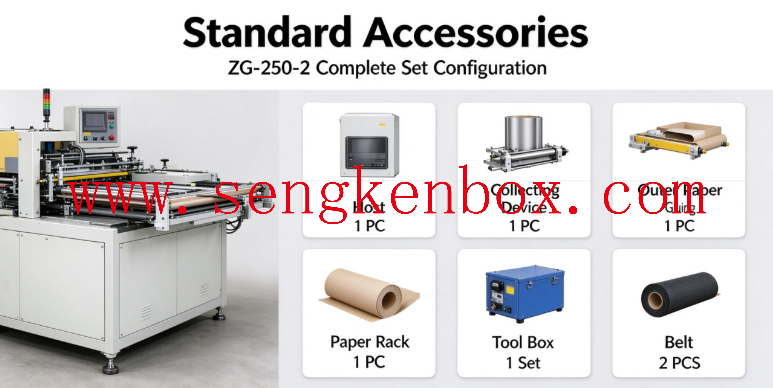
The standard set includes forming host, collecting table, mold, outer-paper gluing stand, inner-paper waxing/gluing stand, paper rack, tool box, belts and spare parts. After installation and commissioning with remote guidance, production can start.
Q5: What is your delivery time and payment?
Lead time is confirmed by quotation and is negotiable; payment terms follow the agreed contract. Contact us with your requirements for a current quote.
Q6: Do you support customization?
Yes. Molds and partial configurations can be tuned to your target tube diameter, wall thickness and layers. Send us your spec sheet for evaluation.
Conclusion
The ZG-250-2 CNC spiral paper tube machine (dual-head, Φ20–250mm, 3–6 layers, 1–25 m/min) covers most tape, film, textile and packaging can production needs with only 1–3 operators. The deciding factors are glue quality, cutting method and electric control stability — check these three first, then compare capacity and mold range.
Send us your target tube inner diameter, wall thickness, paper layers and expected production speed. Our engineering team will provide a professional proposal and quotation.


